Understanding “Ordinary Residence”: How the Immigration Department Determines Whether Hong Kong Is Your Home
From Top Talent Pass Scheme (TTPS) approval to applying for permanent residency over the seven years, how to reasonably arrange residence, work and family to ensure the ordinary residence requirement is met is a core issue every TTPS holder must plan for in advance. When the Immigration Department reviews permanent residency applications, it does not merely check whether the applicant has physically resided in Hong Kong for seven years; rather, it adopts the concept of “ordinary residence”—that is, residing in Hong Kong lawfully, voluntarily and with the intention of settling. Even if one is temporarily absent from Hong Kong, as long as the overall centre of life remains in Hong Kong, the person may still be regarded as ordinarily resident.
In its assessment, the Immigration Department considers a range of factors holistically: the reasons, duration and frequency of your absences from Hong Kong; whether you have a habitual residence in Hong Kong; whether you are employed by a company based in Hong Kong; whether your immediate family members (spouse and minor children) are in Hong Kong; and whether you can provide sufficient proof showing close ties with Hong Kong. Therefore, the residence, work and family arrangements at every stage of the seven years should be consciously designed around these considerations.
Seven-Year Residence Arrangements: Building a Continuous Hong Kong Life Trail
From the moment your TTPS visa is approved, you should establish a clear and continuous Hong Kong life trail. The most direct approach is to rent or purchase a fixed residence in Hong Kong and retain the tenancy agreement, utility bills, management fee statements, and rates and government rent demands—these are important documents for proving your “habitual residence” in future. If you need to leave Hong Kong from time to time for work, do not give up your residence; it is best to maintain the same address and avoid frequently changing accommodation, which could give the Immigration Department the impression that you have no fixed abode.

You must keep track of the days you spend away from Hong Kong each year. Although the law sets no uniform hard rule on how many days per year one may be absent, by convention, if the time spent away from Hong Kong exceeds half the year (i.e. more than 183 days) in any year, the Immigration Department will scrutinise closely whether you still meet the ordinary residence requirement. This does not mean exceeding 183 days automatically leads to failure; the key is whether you can offer a sufficient and reasonable explanation—such as an overseas posting, further study, or family care needs—while also proving you maintained ties with Hong Kong during your absence, for example by continuing to receive salary, paying Hong Kong Mandatory Provident Fund (MPF) contributions, and keeping an active bank account and tax dealings.
Another easily overlooked point is continuity. Even if the number of days away each year is small, if you have a very long period of complete absence from Hong Kong—for example, leaving continuously for more than six months—without being able to provide proof sufficient to persuade the Immigration Department, that period may not be counted within the seven years of ordinary residence. Therefore, your seven-year plan must avoid any “vacuum period”. Before arranging any absence exceeding six months, it is best to seek professional advice first and retain all related supporting documents, such as an overseas employment contract, enrolment proof, or medical records.
Work Arrangements: Making Hong Kong Your Career Base
Among the evidence assessed for ordinary residence, work ties are among the most weighty. From TTPS approval to applying for permanent residency over the seven years, how to reasonably arrange residence, work and family to ensure the ordinary residence requirement is met depends to a large extent on how you root your career entirely in Hong Kong. Being employed by a Hong Kong-registered company, paying salaries tax continuously, participating in the MPF scheme, and having major clients or business partners in Hong Kong are all direct and strong evidence.
If you are self-employed or work freelance, you must also maintain the Hong Kong character of your business: hold a business registration, rent an office or co-working space, open a corporate bank account, and file tax returns and Profits Tax returns regularly. All business documents, contracts, invoices and correspondence emails should be properly retained, as these are objective evidence proving Hong Kong is the core of your business. The Immigration Department will rely on these materials to judge whether you are genuinely operating in Hong Kong rather than merely running an empty shell.
If your work requires frequent travel to the Mainland or overseas, pay special attention to retaining travel records—such as flight tickets, hotel receipts, meeting minutes and work-related email correspondence—and ensure your salary and employment contract are still issued by a Hong Kong company. Some TTPS holders accept postings to Mainland or overseas branch offices; in such cases there must be clear internal secondment documents, while maintaining Hong Kong salary payment and MPF contributions, so that this period can be counted towards ordinary residence. Avoid suddenly switching to being paid by an overseas entity, otherwise you risk interrupting the continuity of residence.
Family Arrangements: Settling Your Family in Hong Kong Together
Family ties are another important indicator the Immigration Department uses when assessing ordinary residence. If your spouse and children live and study in Hong Kong, any reviewing officer will more readily accept that you treat Hong Kong as your permanent home. Conversely, if your family lives elsewhere for a long time, you will need to provide stronger evidence explaining why you yourself still regard Hong Kong as home.
Children enrolled in schools in Hong Kong (whether local or international schools), leaving behind school records, report cards and parent-teacher association participation records, are strong proof of family ties. If the spouse works in Hong Kong or takes part in ongoing community activities—such as volunteer service or professional bodies—these can be retained as well. Filing tax returns in Hong Kong each year, voter registration, holding a Hong Kong driving licence, and joining a medical insurance scheme are all objective markers of you and your family integrating into local society.
Even if family members cannot stay in Hong Kong long term for individual reasons, you can arrange for them to reside in Hong Kong periodically, leaving entry and exit records and accommodation proof, and keep their Hong Kong visas valid. But understand clearly that family members being absent from Hong Kong complicates your case, and you may need more documents to explain how you yourself maintain ordinary residence; therefore, you should arrange for your family to centre their lives on Hong Kong as much as possible.
Absence Management: How to Properly Handle the Days You Are Not in Hong Kong
It is impossible not to leave Hong Kong for a single day over seven years; the key is how to still demonstrate your close ties with Hong Kong during the days you are away. Reasons for absence can be divided into reasonable and risky ones. Business trips, short-term overseas study, accompanying children to overseas school openings, and caring for sick relatives are generally regarded as reasonable; prolonged unexplained absence, or having a main job in the Mainland without maintaining Hong Kong salary payment, are risky reasons.
For each absence, you should prepare a “ties proof pack”: evidence that your habitual residence is continued, proof of employment relationship, records of expenses still incurred in Hong Kong during the absence (such as direct-debit insurance premiums and utility bills), and correspondence records showing you were still handling Hong Kong affairs during that period. It is helpful to organise these on a timeline, so that when you apply for permanent residency later, everything is clear at a glance.
If you need to live in the Mainland or overseas for longer periods each year—for example, to expand Greater Bay Area business—consider adopting a regularised pattern, such as returning to Hong Kong once a week or every other week, establishing a fixed routine, and leaving a clear travel record in your diary or emails. During prolonged absences, you must still maintain ongoing professional activities in Hong Kong—such as attending board meetings or meeting clients—as these records are more persuasive than verbal explanations.
Seven-Year Document Management: Preparing Your Permanent Residency Application Checklist in Advance
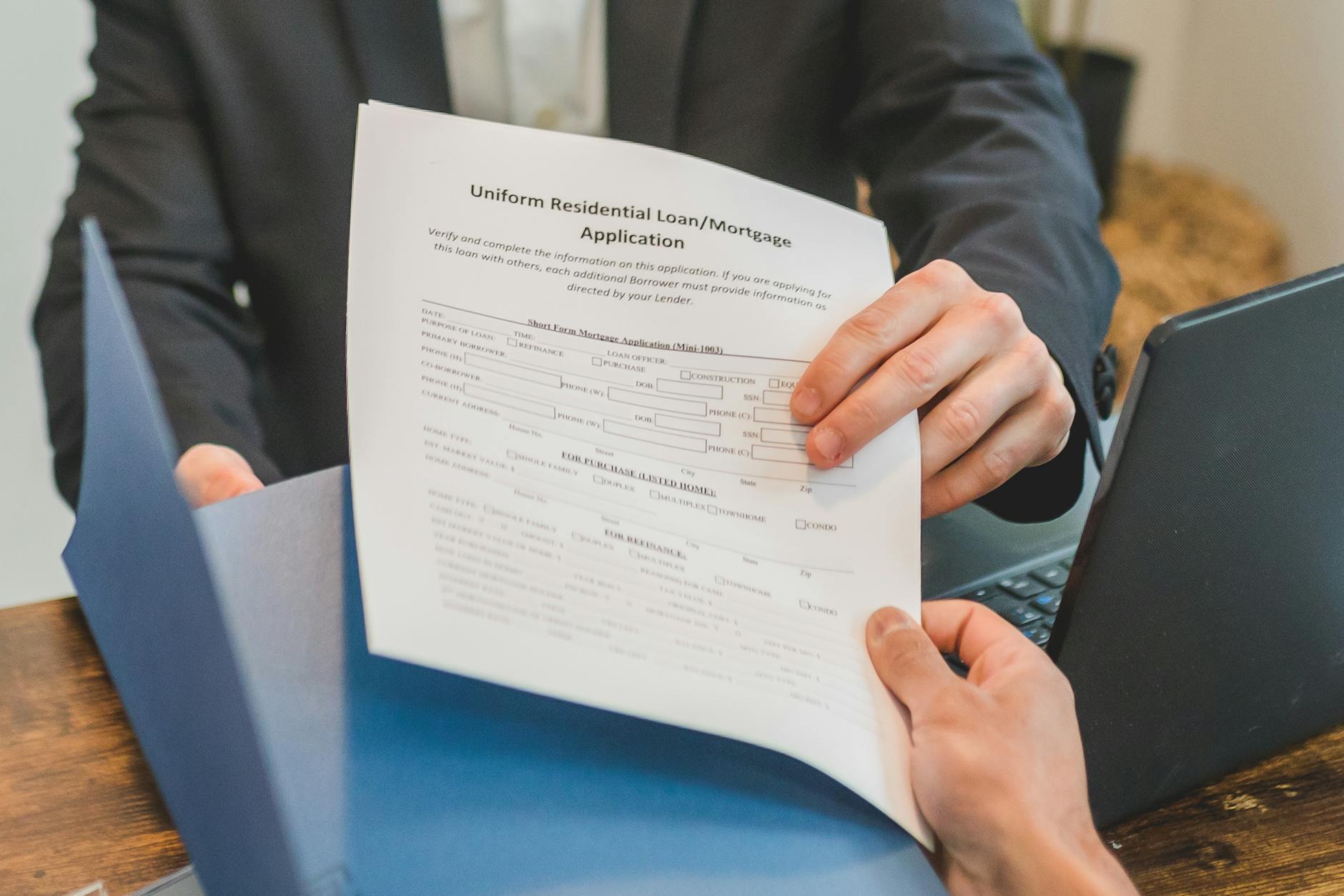
Starting to look for documents only in the seventh year, one often finds many records are incomplete. From TTPS approval to applying for permanent residency over the seven years, how to reasonably arrange residence, work and family to ensure the ordinary residence requirement is met—sound document management is the foundation of everything. It is recommended to systematically save the following categories of documents in an electronic folder from day one:
- Residence proof: tenancy agreement, rates and government rent demands, utility bills, fixed-line telephone bills, management fee statements, household certificate, bank statements showing the address.
- Work proof: employment contract, payslips, tax demands (salaries tax and Profits Tax), MPF contribution records, copy of company business registration, corporate bank statements, business contracts and invoices.
- Family proof: copies of spouse’s and children’s Hong Kong identity cards and visas, children’s school documents, family tax records, insurance policies.
- Social ties: voter registration notice, professional membership certificates, volunteer service certificates, driving licence, major medical reports and hospitalisation records.
- Absence records: each entry and exit date, flight tickets, hotel accommodation, work and contact proof during the absence.
Spending half an hour tidying up every quarter or half-year can reduce the pressure when finally applying for permanent residency. You may also choose to conduct a professional assessment around the fourth to fifth year, to see whether the existing materials are sufficient and thus strengthen them in time, rather than discovering in the seventh year that key-year records are incomplete.
Frequently Asked Questions
If I am absent from Hong Kong for more than 183 days each year, will I fail to meet the ordinary residence requirement?
Not necessarily. 183 days is a reference indicator; the Immigration Department reviews the situation across the whole period. If you can provide reasonable reasons and sufficient ties proof, you may still meet the requirement, but the risk is higher, so it is advisable to seek professional advice beforehand.
My work is long-term in the Mainland, but my family resides in Hong Kong—can this be counted towards ordinary residence?
It can, but with great caution. You need to provide records of salary paid by a Hong Kong entity, MPF contributions and tax filing, and retain proof of frequent returns to Hong Kong to reunite with family, such as transport and accommodation evidence, to show that the centre of your life remains in Hong Kong.
If I study overseas for a period during the seven years, will it interrupt my ordinary residence?
Further study is a common reasonable reason for absence. As long as you retain your habitual residence in Hong Kong during your time overseas, do not completely sever ties with Hong Kong (such as bank accounts, tax affairs, insurance), and return to Hong Kong to settle immediately after the course ends, ordinary residence will generally not be interrupted. Retain the admission notice and tuition fee receipts and submit them together with your application.
When applying for permanent residency, do I need to submit all seven years of entry and exit records?
The Immigration Department will check your entry and exit records itself, but you need to submit proof for each prolonged or key absence period. Therefore, you should also properly retain the date and related proof of each absence, to be prepared for any eventuality.
Conclusion: Seven-Year Planning Should Start Early Rather Than Late
A TTPS visa is only a beginning; the real test of patience is the life arrangement over the following seven years. From TTPS approval to applying for permanent residency over the seven years, how to reasonably arrange residence, work and family to ensure the ordinary residence requirement is met is by no means something achievable in a short while. It requires you to constantly maintain the awareness of “treating Hong Kong as home”, and turn that awareness into concrete and continuous residence, work and family records. Planning early, saving documents systematically, and seeking professional assistance when in doubt can substantially increase the certainty of your successfully obtaining Hong Kong permanent resident status.